Harry Styles’ Grammys Performance Was Affected by a Major Technical Error
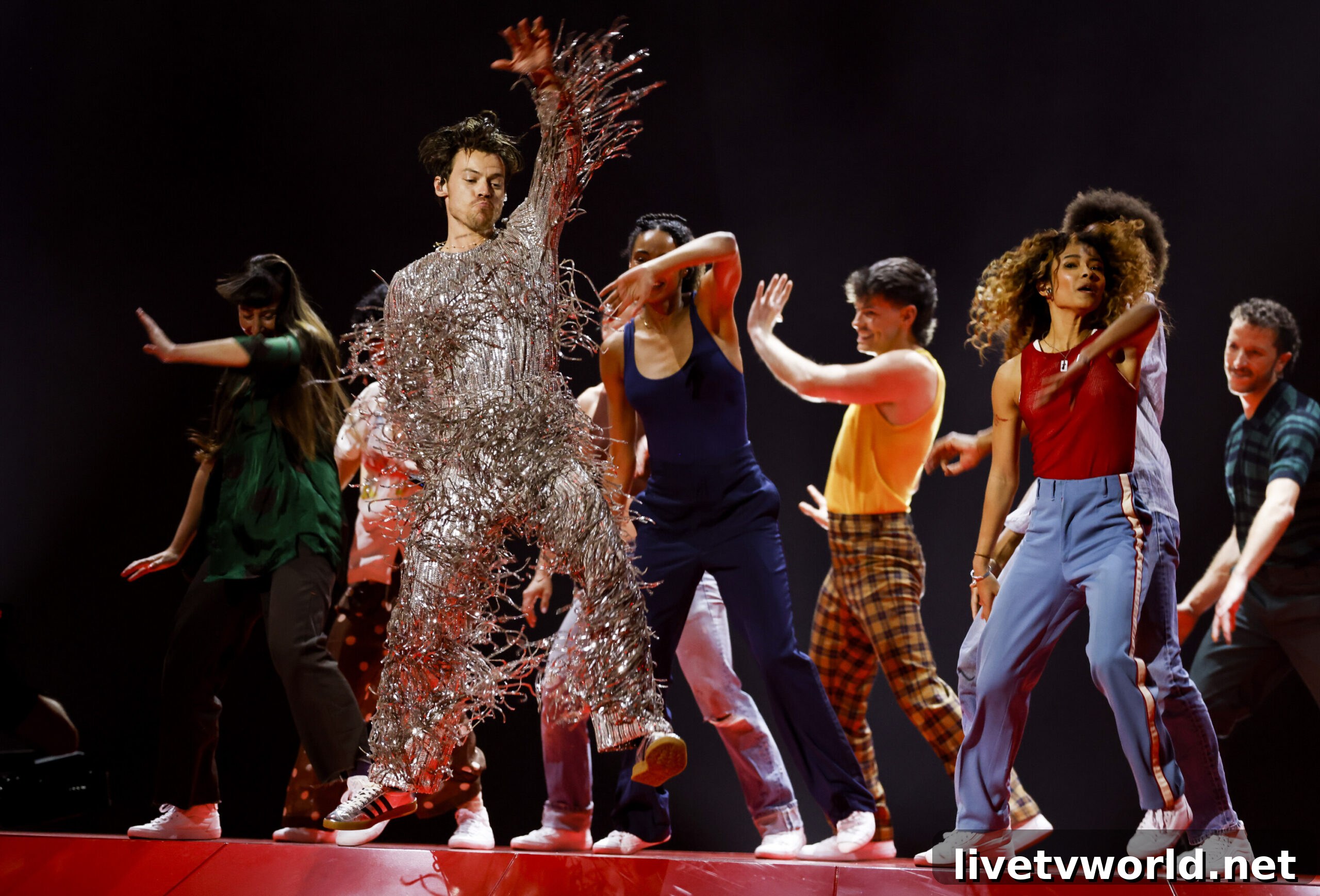
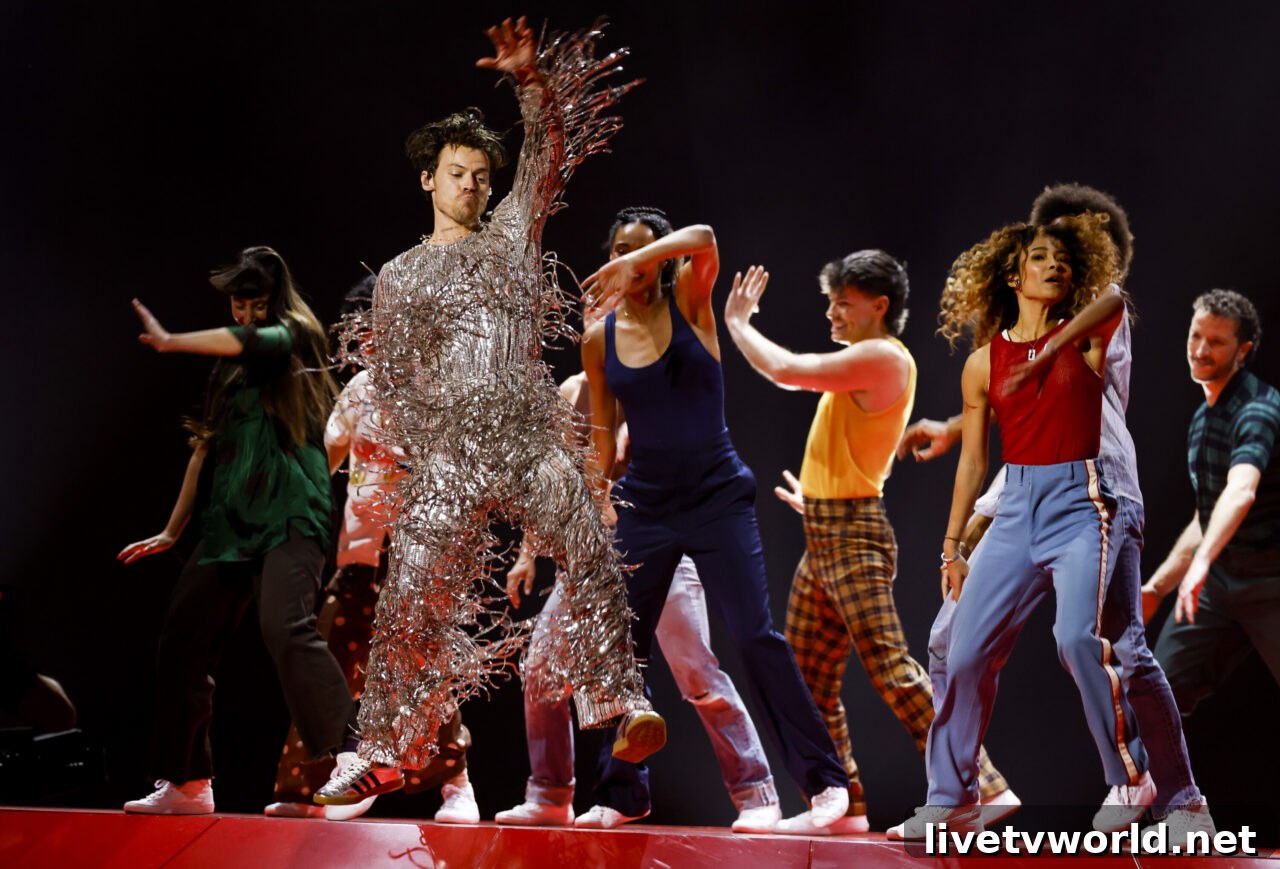
When Harry Styles took the stage at the Grammys to perform “As It Was,” viewers and critics noticed something felt off. During the televised performance he adjusted his in-ear monitor and carried on, but behind the scenes a serious technical issue forced both him and his team of dancers to improvise. What looked to some like a lackluster moment was actually the result of a last-minute change to a moving stage element that the company had rehearsed in the opposite direction.
The group’s choreography relied on a large revolving turntable, mirroring imagery prominent in the “As It Was” music video. For days the company rehearsed counterclockwise patterns and carefully practiced transitions, formations and synchronized slides. Choreographer Dexter Da Rocha explained that the dancers and Styles had rehearsed the specific formations extensively and reached a precise level of timing and balance.
On the night of the live telecast, however, the turntable rotated the opposite way. That reversal required every dancer and Styles himself to adapt instantly to reversed movement and altered spatial orientation. Dancing on a rotating platform demands specific balance and muscle memory; shifting direction changes how steps feel and how formations open and close. Yet the performers adjusted on the fly and navigated the unexpected complication while remaining professional and composed.
Da Rocha described the predicament: twelve performers were on the turntable and they had practiced for ten days to perfect the formations. During team rehearsal the day before, everything was “spotless,” he said, but during the live show the rotation was reversed. The cast had to mentally invert every pattern in real time, walking and performing movements in the opposite direction from what they had drilled.
To their credit, the dancers still achieved several ambitious visual moments. One shot from an overhead camera captured the group forming a single flowing line that moved as one — a difficult feat even under ideal conditions. In this instance the sequence had to be executed in reverse of how it was staged, making the accomplishment all the more impressive given the circumstances.
Choreographer Da Rocha praised Styles for his presence and adaptability, noting that Harry managed to adjust his steps and reverse the duet partner work while singing live. That quick thinking kept the performance intact and allowed the piece to retain its emotional core despite the technical setback.
Another company member, dancer Brandon Mathis, echoed similar sentiments in social posts after the show, commending Styles as both an exceptional performer and a grounded collaborator who cares about the work and the people he performs with. Mathis highlighted how important it was that everyone stayed supportive and focused when plans suddenly changed on live television.
Though the staging error affected how the routine looked compared with rehearsals, the team’s resilience turned a potential disaster into a polished live moment that still conveyed the song’s energy and intimacy. The ability to problem-solve in the moment is a hallmark of professional live performance, and the Grammys incident demonstrates how much preparedness and teamwork matter when things don’t go according to plan.
Beyond the single performance, the night was a major one for Styles. He won two Grammy Awards for his album Harry’s House: Pop Vocal Album and Album of the Year. Those honors underscored the critical and commercial impact of his work, even as the live staging hiccup drew media attention. Fans and industry observers have since praised the performers for salvaging the live presentation under pressure and for keeping the focus on the music.
Live television often requires split-second adjustments from artists and crew. Technical elements — from moving stages to camera cues and rotating platforms — must sync perfectly, and when they don’t, people onstage must adapt instantly. In this case, Harry Styles and his dancers demonstrated the experience and poise needed to manage an unexpected reversal mid-performance, ultimately delivering a memorable Grammys moment despite the obstacle.