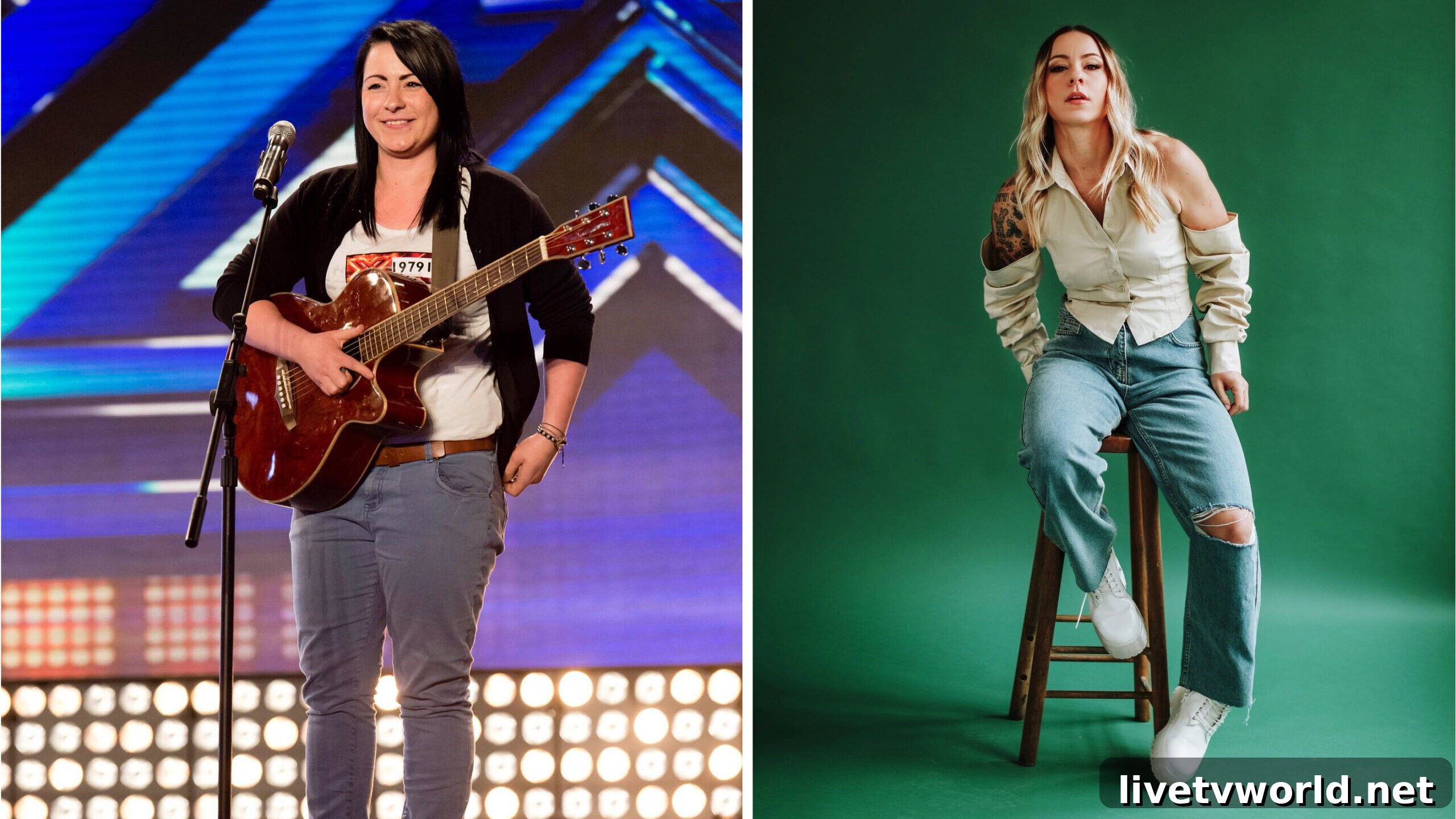

Lucy Spraggan opens up about the horrific rape that led to her abrupt X Factor UK departure, and how Simon Cowell helped heal her heart
When 20-year-old Lucy Spraggan left The X Factor UK suddenly in 2012, after only four weeks of live shows, speculation mounted that something far more serious than illness was behind her departure. Tabloids quickly suggested that a reality TV contestant had been assaulted by hotel staff, and the rumor mill fixated on Lucy because she had not been seen in public since a recent party.
Though court proceedings and legal protections kept Lucy’s identity and experience largely private at the time, the facts eventually emerged: a hotel porter pleaded guilty and received a ten-year sentence. For years Lucy stayed silent in public about why she left the show. Ahead of the July 20 release of her memoir, Process: Finding My Way Through, she has now spoken candidly about the rape and the aftermath, describing both the trauma she endured and the complex, often painful response from those around her.
Lucy has been openly critical of the show’s producers for failing to protect her and for what she sees as negligence. But she also reveals that Simon Cowell reached out in 2020 to apologize personally, later offering her a publishing deal and a renewed professional relationship. At the time of her season, Simon was not on the judging panel; he was working in the United States as an executive producer.
“They encourage you to be a caricature of yourself”
On the show, producers quickly framed Lucy as the “party girl.” She admits she leaned into that image because she did not want private family matters exposed on camera; playing the boisterous, intoxicated character felt safer and, for a while, harmless. “You tell producers things about yourself, and they say, ‘The public is going to love that,’” she recalls. “They encourage you to be a caricature of yourself.”
That manufactured persona led to off-camera antics with fellow contestant Rylan Clark, which the production team tacitly encouraged and the audience embraced. Their antics became part of a storyline: the show eventually moved them out of the main contestant hotel, into separate accommodation where security was weaker. In that setting, the conditions that allowed the assault to take place were created.
“I knew my role: get drunk, do something funny, appear in the headlines the next day,”
Rylan’s 25th birthday at a Mayfair nightclub was heavily photographed by production staff, journalists and paparazzi. Lucy says she knew her part: “get drunk, do something funny, appear in the headlines the next day.” After the party she passed out and was taken back to the hotel by a production assistant. A hotel porter later offered to help escort her to her room, and, according to Lucy, flipped the security latch so the door could not be locked behind them.
When Lucy later woke with an overwhelming sense of dread, she realized she had been raped. Still disoriented and unable to process what had happened, she dressed and moved into autopilot. The production team reported the assault to police and the porter was arrested. In the immediate aftermath, the medication given to block HIV exposure left Lucy too ill to continue on the show.
Lucy wanted to share what happened, but people said to her “You have your whole career ahead of you and you can’t retract this.”
Initially Lucy wanted to speak out publicly about the assault. She says she was urged not to, with people warning that a public disclosure could jeopardize her career. Her mentor on the show, Tulisa Contostavlos, visited and spoke with her, but Lucy felt she lacked independent advice and support. In the years that followed, she says production offered immediate help after the assault but failed to provide ongoing care. “No one ever contacted me to ask if I was OK,” she says. “No one called or emailed when the trial was over and he was convicted. No one offered me rehabilitation or ongoing mental health treatment. I was on my own.”
X Factor producers did not believe they were negligent
After leaving the show, Lucy focused on her music and achieved chart success, but struggled privately with alcohol, drugs and suicidal thoughts. After parting ways with her label in 2014 she attempted suicide, and later that year began a relationship with Georgina, who helped nurse her through recovery. She continued to rebuild her life and career, eventually becoming sober and returning to music.
Years later, prompted in part by the death of host Caroline Flack in 2020, Lucy began writing her memoir. During that process she contacted ITV, Fremantle and SYCO. ITV acknowledged that her experience had been “an unhappy one” but disputed claims of negligence by the show’s producers. Lucy found that response devastating. “After 10 years of healing, I then had a huge corporation say, ‘We never gave a s— about you in the first place,’” she says. The reaction reopened wounds and made her question her own worth before she ultimately decided to go public with her story.
Simon Cowell reached out with a heartfelt apology. “Instead of breaking my heart, he helped put it back together again.”
In 2020 Simon Cowell contacted Lucy personally. At first she did not want to speak with him, but she agreed — partly to confront him. Instead of a cold response, she says Simon offered a heartfelt apology that had profound meaning for her. “I have thought about you many, many times over the years, about what happened to you, about how I should’ve been there for you,” he told her. “I want you to know that I am truly, truly sorry.”
That apology, Lucy says, helped close a painful chapter. She is now signed to a publishing deal with his company and describes a growing friendship and mutual respect. Simon told the Guardian that what happened to Lucy was “horrific and heartbreaking” and that he supports her decision to tell her story and pursue positive change.
“Once you feel worthy, you see things for what they are”
Today Lucy has been sober for several years, is in a stable relationship, and is preparing to release her seventh album. She will also support Robbie Williams on his upcoming tour. Reflecting on recovery and success, she says, “Once you feel worthy, you see things for what they are. You see success for what it is, because it’s so subjective. At one point, success for me meant getting out of bed. Then it was playing Glastonbury. Now it’s being a lesbian succeeding in the music industry. I’m really happy with the things I’ve achieved, and I have to attribute my successes to me. I’m not just ‘that girl’.”