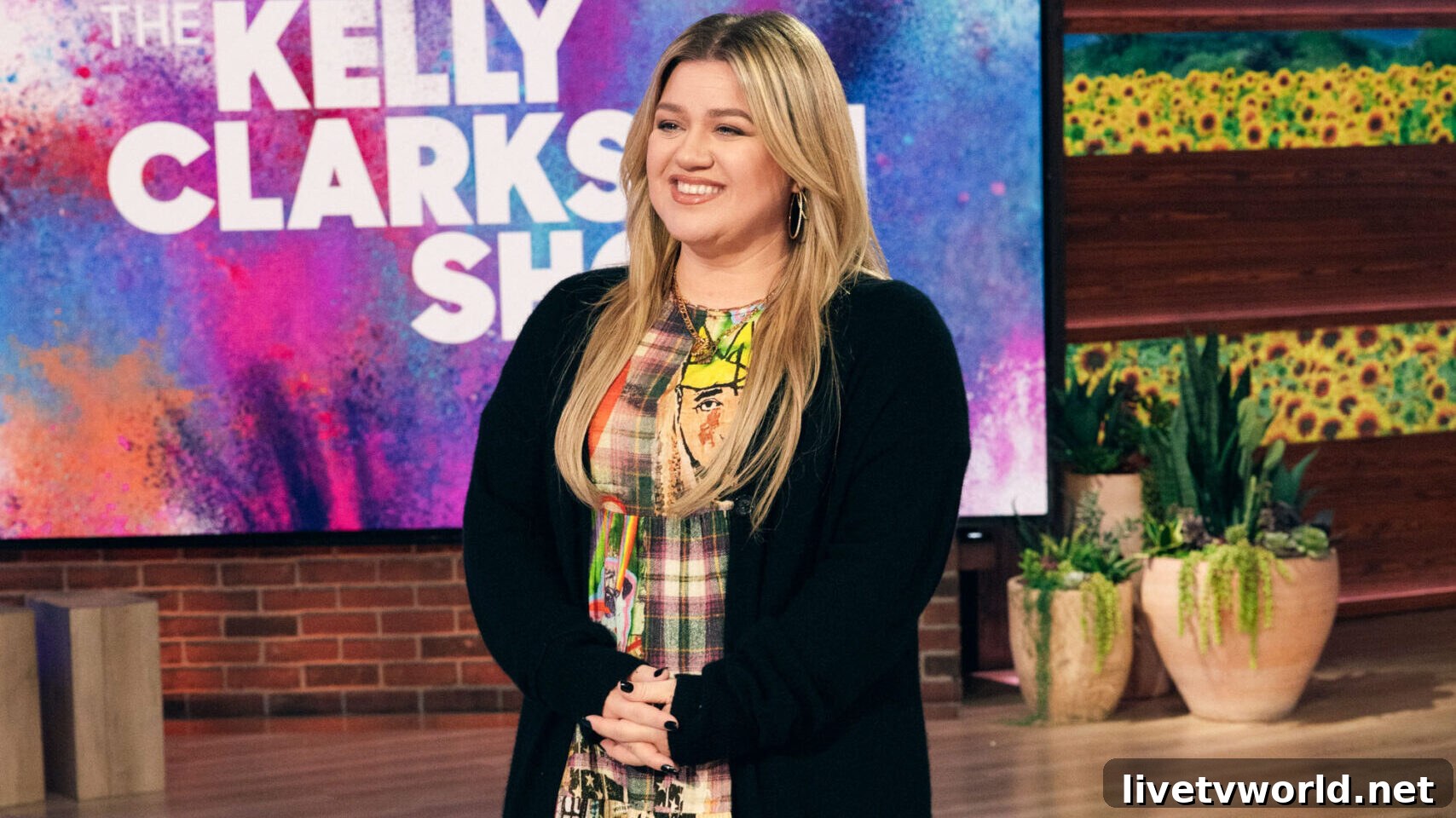
The Kelly Clarkson Show moving to Rockefeller Center in New York City
After staging its New York premieres the past two seasons, Kelly Clarkson will take her daytime talk show out of Los Angeles and into the heart of Manhattan. Next season, The Kelly Clarkson Show will relocate production from the Universal lot in Los Angeles to NBC Studios at 30 Rockefeller Plaza.
The program will be filmed in front of a live studio audience in Studio 6A, Variety confirms through an NBCUniversal spokesperson. Studio 6A has a long history as the home for leading late-night programs and personalities, including Jimmy Fallon, Conan O’Brien and David Letterman. NBCUniversal will build a new, state-of-the-art set for Clarkson’s show and provide the necessary technical and support facilities for live daytime production at Rockefeller Center.
The move follows a recent expansion of New York State’s Film Tax Credit program, which lowered eligibility thresholds and added incentives aimed at attracting television productions to the state. The updated guidelines shorten the required prior years of filming for talk and variety shows from five years to two, making New York a more viable and attractive production base for established series.
Kelly will move to New York
Details about the show’s full staffing and long-term logistics are still being finalized. Since its 2019 premiere, most of the The Kelly Clarkson Show staff have been based in Los Angeles, but Kelly plans to relocate to New York. Along with Clarkson, executive producer and showrunner Alex Duda and longtime musical director Jason Halbert are expected to make the move.
The relocation represents a significant operational shift: moving a daily syndicated talk show across the country requires redesigning workflows, expanding technical support in a new facility, and addressing the needs of the crew and on-air talent. NBCUniversal’s commitment to build a custom studio indicates a major investment in keeping the show’s production values high while adapting to a new home base.
Clarkson’s program has enjoyed critical and commercial success. It has been nominated for multiple Daytime Emmy Awards—recently receiving 11 nominations—and has won 13 daytime Emmys over the course of its run. The show’s audience has also grown season to season and currently averages about 1.37 million viewers per day, ranking it among the top syndicated daytime talk shows.
Will Kelly remain a coach on The Voice?
The Kelly Clarkson Show is set to begin its fifth season this fall and has already been renewed through a sixth season, which will keep the series on the air through 2025. That continuity gives the show stability as it undertakes the move to New York.
Clarkson’s move raises practical questions about her continuing role as a coach on NBC’s singing competition The Voice, which films in Los Angeles at Universal Studios. When both shows were produced on the same lot, Clarkson could transition quickly between tapings. With production based in New York, the same-day commute between studios will no longer be feasible, prompting the need for updated scheduling and coordination between the two productions.
Representatives and producers will need to work out travel plans, taping schedules and any potential accommodations for remote appearances or pre-recorded segments if Clarkson remains involved with The Voice. For viewers and industry observers, the situation highlights how evolving tax incentives and strategic studio investments can reshape where and how daytime television is produced.
As the move progresses, additional details about the launch timeline in New York, staff transitions and how Clarkson will balance multiple on-air commitments are expected to be announced. For now, the move to Rockefeller Center marks a major next chapter for The Kelly Clarkson Show—bringing the program to one of television’s most iconic addresses and positioning it to capitalize on New York’s production incentives and cultural hub.