
Adam Lambert Hits Back at Haters Trolling His Boyfriend Oliver Gliese
Adam Lambert, the former American Idol contestant and current frontman for Queen, publicly responded to homophobic comments aimed at his boyfriend, Oliver Gliese, after the couple was photographed during a night out in West Hollywood.
Lambert posted a thoughtful message to his Instagram Story, expressing both gratitude for the fans who showed support and frustration at the hateful reactions some people left online. He described the evening as a rare and joyful night out, joking that it’s unusual to run into paparazzi in West Hollywood these days and that the attention was “so retro.”
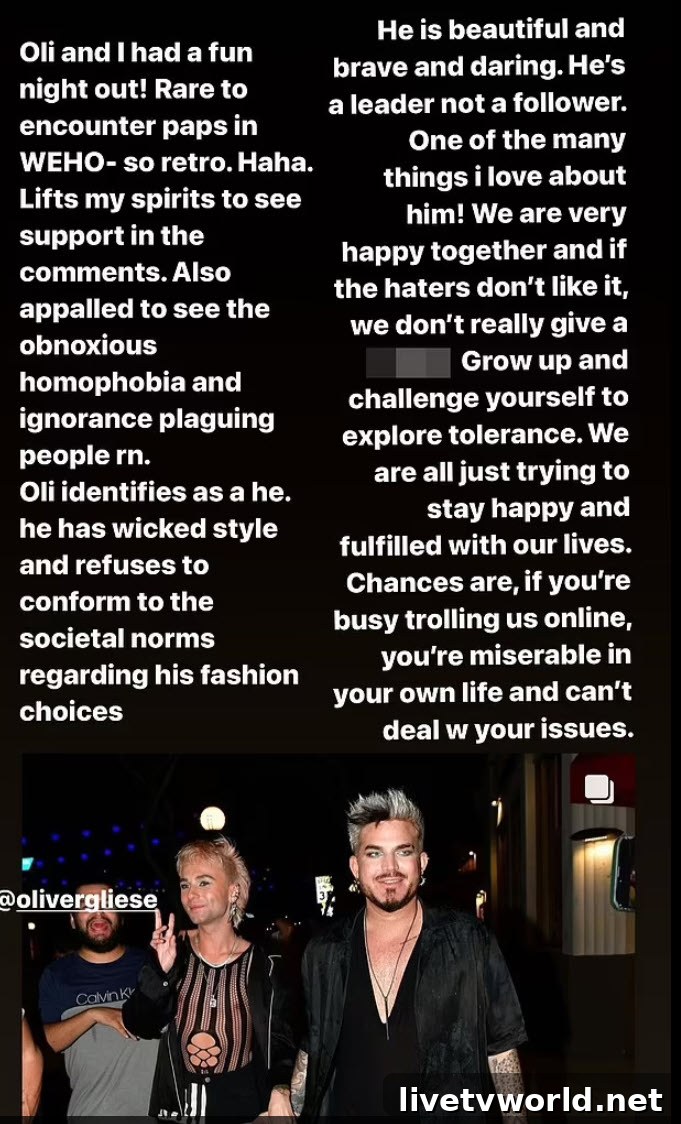
Lambert defended Gliese’s personal style and identity in clear terms: “Oli identifies as a he. He has wicked style and refuses to conform to the societal norms regarding his fashion choices,” Adam wrote. He praised Oliver for his boldness and individuality, calling him “beautiful and brave and daring,” and pointed out that those qualities are part of what he loves about his partner.
Making his stance unmistakable, Lambert added that he and Oliver are happy together and that they won’t be affected by critics. “We are very happy together,” he said. “And if the haters don’t like it, we don’t really give a f—. Grow up and challenge yourself to explore tolerance. We are all just trying to stay happy and fulfilled with our lives.” His message combined personal affirmation with a broader call for empathy and maturity from those who spread intolerance online.
Many readers noted the contrast between fans who offered heartfelt support and a smaller but vocal group who resorted to homophobic or derogatory commentary. Lambert’s public reply aimed to both shut down those attacks and to encourage a more compassionate, less judgmental online culture. By stressing Oliver’s agency in how he presents himself—his clothing, makeup, and aesthetic choices—Adam reframed the narrative from one of criticism to one of personal freedom and expression.
Oli Reacts to the Haters
Oliver Gliese also addressed the backlash on his own Instagram account, calling out the toxicity he sees in comment sections and reflecting on how cruel behavior can affect people in the public eye. He wrote that online trolling often reflects unhappiness in the lives of the trolls themselves: “Chances are, if you’re busy trolling us online, you’re miserable in your own life and can’t deal w your issues.”
Gliese used his post to highlight the real consequences that relentless negativity can have, noting that public figures sometimes struggle with mental health, low self-esteem, and other pressures that can be exacerbated by abusive comments. “Let’s just highlight how disgusting people are in comment sections,” he wrote, adding that increased kindness would serve everyone better. “Kindness never killed anyone!” he observed, urging followers to consider the human impact of their words.
Clarifying his identity and intentions, Oliver emphasized that he identifies as a man and is not dressing as a woman. “I identify as a man, I just happen to have great legs I wanna show and love makeup!” he said, explaining that his fashion and grooming choices are personal expressions rather than statements about gender. He also noted practical reasons for his style choices: as a smaller man, he often finds that much of menswear doesn’t fit well and can be visually uninteresting, so he opts for looks that feel more exciting and true to himself.
Together, Lambert and Gliese’s responses underscore a strong, united front: they are committed to supporting one another and to calling out hateful behavior when it appears. Their public remarks invite a larger conversation about tolerance, self-expression, and the responsibilities of online discourse. By speaking up, both men encouraged fans and onlookers to choose kindness and to question the cultural norms that police appearance and gender expression.
The exchange also highlights how personal style and public scrutiny can collide for people in the spotlight. For Lambert and Gliese, the reaction to their night out was an opportunity to reaffirm identity, celebrate individuality, and remind others that respect and empathy should be the default in any discussion about someone else’s life. Their statements serve as a reminder that love and self-expression deserve protection from harassment and that promoting understanding benefits everyone.