
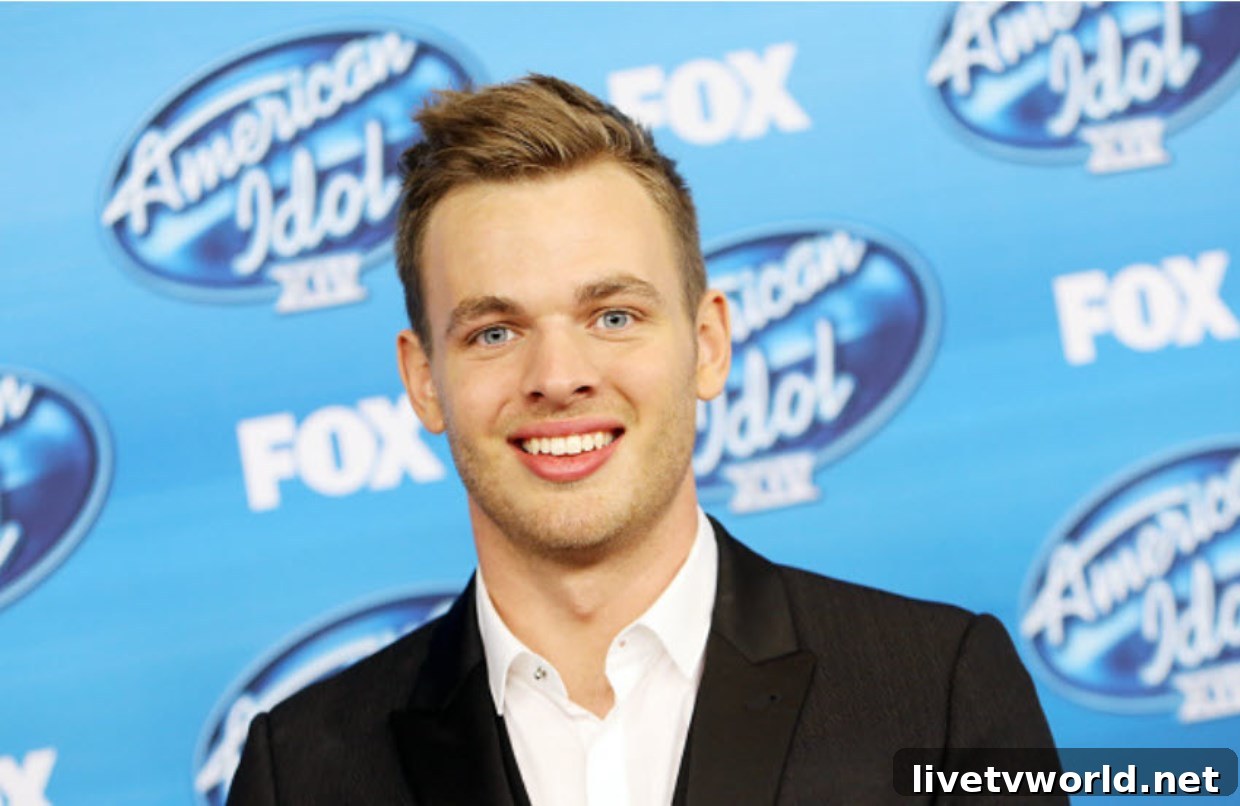
Clark Beckham says being a Christian on American Idol was easy. Other alums disagree
American Idol season 14 runner-up Clark Beckham addressed whether the show is difficult for Christian contestants in a recent Instagram post. Beckham says it wasn’t a problem for him, but the responses from other reality-show alumni show the experience varies widely.
Beckham, who openly discussed his faith during his 2015 run on American Idol, continues to weigh in on the current season via his YouTube channel and social posts. Noting the number of Christian contestants this year, he says hopefuls often ask whether being openly Christian hurts their chances. His answer: “No.” He explained that Idol encouraged him to share his background, sometimes listing “Worship Leader” on-screen and filming b-roll at his church, even showing his pastor. “I have never ever thought Idol was tough against Christians,” he said.
In an Instagram post, Beckham asked, “Is American Idol tough on Christians?” and replied plainly that his experience was positive and welcoming.
America’s Got Talent producers discouraged Clark from discussing his faith
Beckham contrasted that with his audition for America’s Got Talent, where producers reacted differently. He recalled being asked where he gained his experience; after answering “church and coffee shops,” the producers stopped filming and asked him to repeat the answer without mentioning “church,” saying, “We don’t want to freak anyone out.” Beckham maintains that quote is verbatim, underscoring how one production can handle faith differently from another.
The comments on Beckham’s post drew a lively discussion, with a range of perspectives from former contestants and singers who have appeared on Idol, AGT and The Voice.
Christian Guardino, who auditioned for both American Idol and America’s Got Talent, noted a positive experience: “Yeah I got to sing a gospel song and I was super happy I got to do so.”
“Everything I said about my faith and testimony was cut”
Others described a very different reality. Franklin Boone, a Season 18 Top 20 contestant on American Idol, wrote that his faith and testimony were removed from the show’s coverage. “Respectfully, I disagree,” he said. Boone explained that producers cut material about his Christianity and that he received veiled, yet clear, feedback at multiple points. He added that he witnessed similar treatment of other contestants who were open about their faith or who let it influence their song choices. He said he wished he had spoken up more to make omitting that content more difficult.
A The Voice alum didn’t go to Hollywood after refusing to be Vaxxed
The conversation also touched on vaccine requirements and religious exemption claims. Joanna Serenko, who appeared on The Voice Season 18, said she later auditioned for American Idol but could not continue after receiving a golden ticket because of a vaccine mandate. She stated that she did not plan to get the COVID vaccine for several reasons, including religious ones, and said Idol informed her she could not return without meeting the mandate. Serenko described discussing her decision publicly and engaging in back-and-forth conversations with a medical professional about natural immunity versus vaccination.
Those exchanges drew mixed reactions in the thread, with some disputing claims about natural immunity and its equivalence to vaccination.
Season 4 finalist Constantine Maroulis offered a pragmatic perspective on career outcomes, noting that several Idol alums who identify as Christian have gone on to success in mainstream or Christian music—artists such as Danny Gokey, Colton Dixon and Mandisa among them—highlighting Idol’s role in launching varied careers.
On the other hand…Carly Smithson says NOT being Christian was hard on her season.
Not every contestant found the environment easy. Season 7 finalist Carly Smithson commented simply, “It was hard not being a Christian for me on Idol,” a brief statement that suggests personal or cultural friction for non-Christian contestants during her season.
Recent contestants added more contemporary perspectives. Current season competitor Mikenley Brown described strong positive fellowship on her season, saying they shared a night of worship together in Hollywood that lasted for hours. Another contestant, Sarah Snyder, who has not yet appeared on air, echoed Beckham’s view from some seasons: producers did not discourage her from mentioning her role as a worship director at her church, and she was pleasantly surprised by how many Christians were on the roster.
One commenter, a singer named Sam Mark, pushed back on the notion that being Christian is particularly difficult in these settings. He urged empathy for Jewish contestants, referencing broader reports of rising antisemitism and relating personal experience with threats and violence aimed at Jewish people. His comment serves as a reminder that contestants’ experiences of bias can differ greatly depending on their faith and background.
Taken together, these responses show there is no single, universal experience for religious contestants on televised singing competitions. Production decisions vary by show and season, and individual contestants report a wide spectrum of treatment—from encouragement and spotlighting of faith to selective edits or pressure to downplay religious references. For hopefuls and fans alike, these accounts underscore that much depends on the particular production team, the season’s direction, and how openly a contestant chooses to present their faith.