
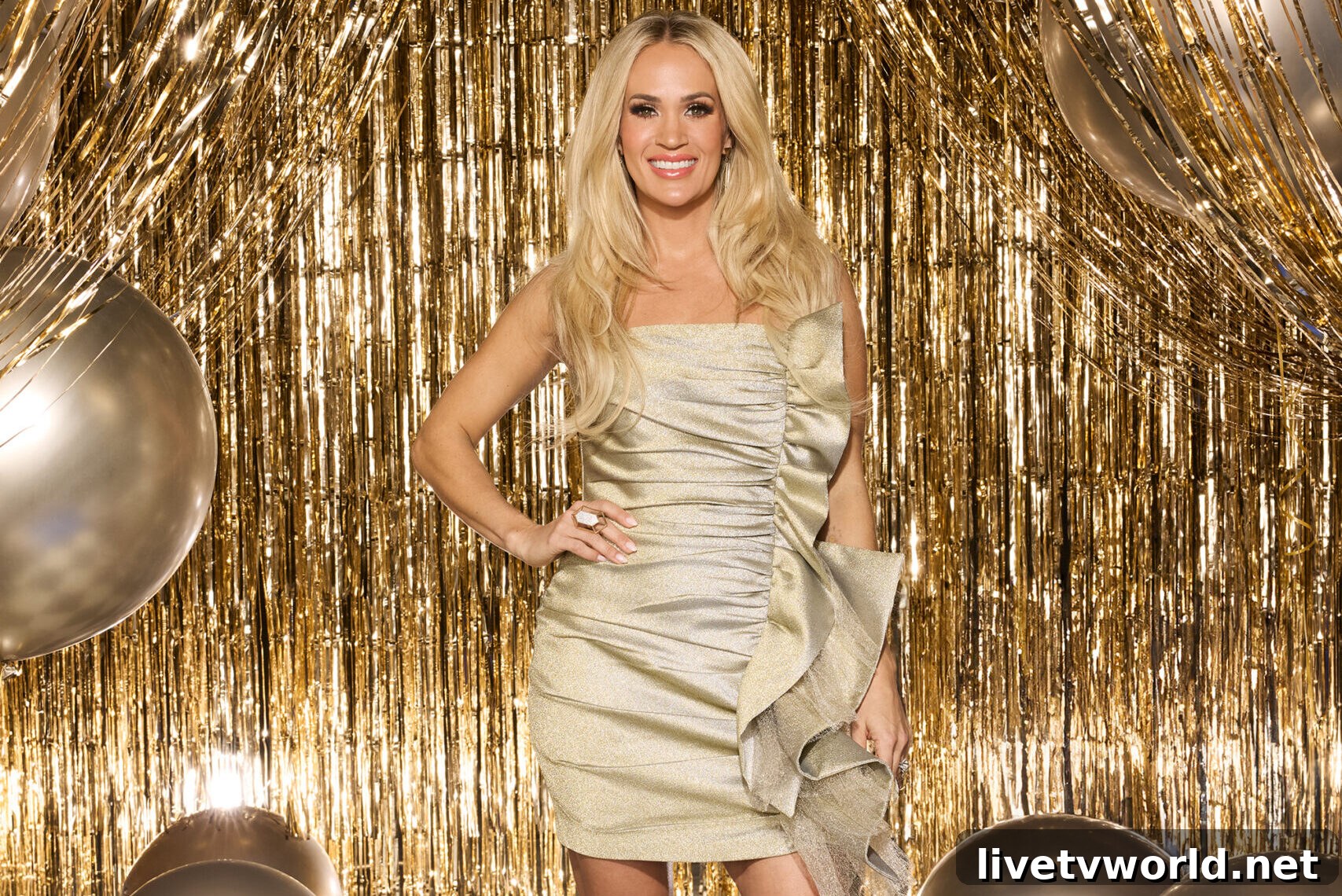
American Idol’s Carrie Underwood to Perform at Trump Inauguration Ceremony
UPDATE: Carrie Underwood has issued a statement about the performance. In it she says she loves her country and is honored to have been asked to sing at the inauguration. She adds that she is answering the call to perform “at a time when we must all come together in the spirit of unity and looking to the future.”
Carrie Underwood, the country star who recently joined the American Idol judging panel and who rose to fame as the show’s fourth-season winner, is set to perform at the presidential inauguration on January 20. According to published reports and a program screenshot circulated online, Underwood will sing “America the Beautiful” during the swearing-in ceremony at the U.S. Capitol. A spokesperson for the Presidential Inaugural Committee has since confirmed her participation.
Underwood has largely avoided overt political involvement in the past, so news of this appearance surprised many fans and observers. In announcing her decision, she framed the performance as an opportunity to promote unity and look forward, language commonly used by artists asked to represent a unifying national moment. The choice, however, has prompted a range of reactions because presidential inaugurations are deeply political events and invite scrutiny of any artist’s decision to participate.
Carrie Underwood: Disappointing a Segment of Her Fanbase
Some fans have expressed disappointment, questioning why Underwood would align herself, even momentarily, with a divisive political moment. She does not need the exposure—Underwood remains one of country music’s biggest acts, recently taking Katy Perry’s place on the American Idol panel, performing on national New Year’s broadcasts, and preparing new content from her Las Vegas residency for streaming platforms. Given her career momentum, critics ask what she gains from performing at the inauguration and whether the appearance risks alienating part of her audience.
Observers point to several personal and public signals that may help explain her choice. Underwood’s husband, former NHL player Mike Fisher, has publicly expressed conservative views in the past, and Underwood herself has been more openly religious in recent years. During the COVID-19 pandemic she liked a social media post that criticized mask mandates at a local school meeting, an action that attracted attention and debate among her followers.
Her public stances have evolved over time. In 2012 she faced backlash and discussion after expressing support for same-sex marriage; that moment remains part of her public record and illustrates that high-profile artists’ positions can shift or be reinterpreted by audiences as they navigate personal beliefs and public expectations.
This is not the first time a singer has faced long-term scrutiny for performing at a presidential inauguration. For example, a young performer who sang at an earlier inauguration later said she regretted the decision. Such experiences help explain why artists consider both the immediate honor of an invitation and the potential long-term perception among fans and the wider public when deciding whether to take the stage for a political ceremony.
For Carrie Underwood, the choice to sing “America the Beautiful” at the swearing-in ceremony will likely be framed as a patriotic, unifying contribution to a national event. Still, the decision underscores the broader tension artists face when asked to participate in political moments: balancing personal convictions, professional opportunities, and the diverse expectations of a large and varied fanbase. As the inauguration approaches, reactions will continue to develop across social and traditional media, and Underwood’s statement emphasizing unity is likely to remain central to how she explains her participation.