
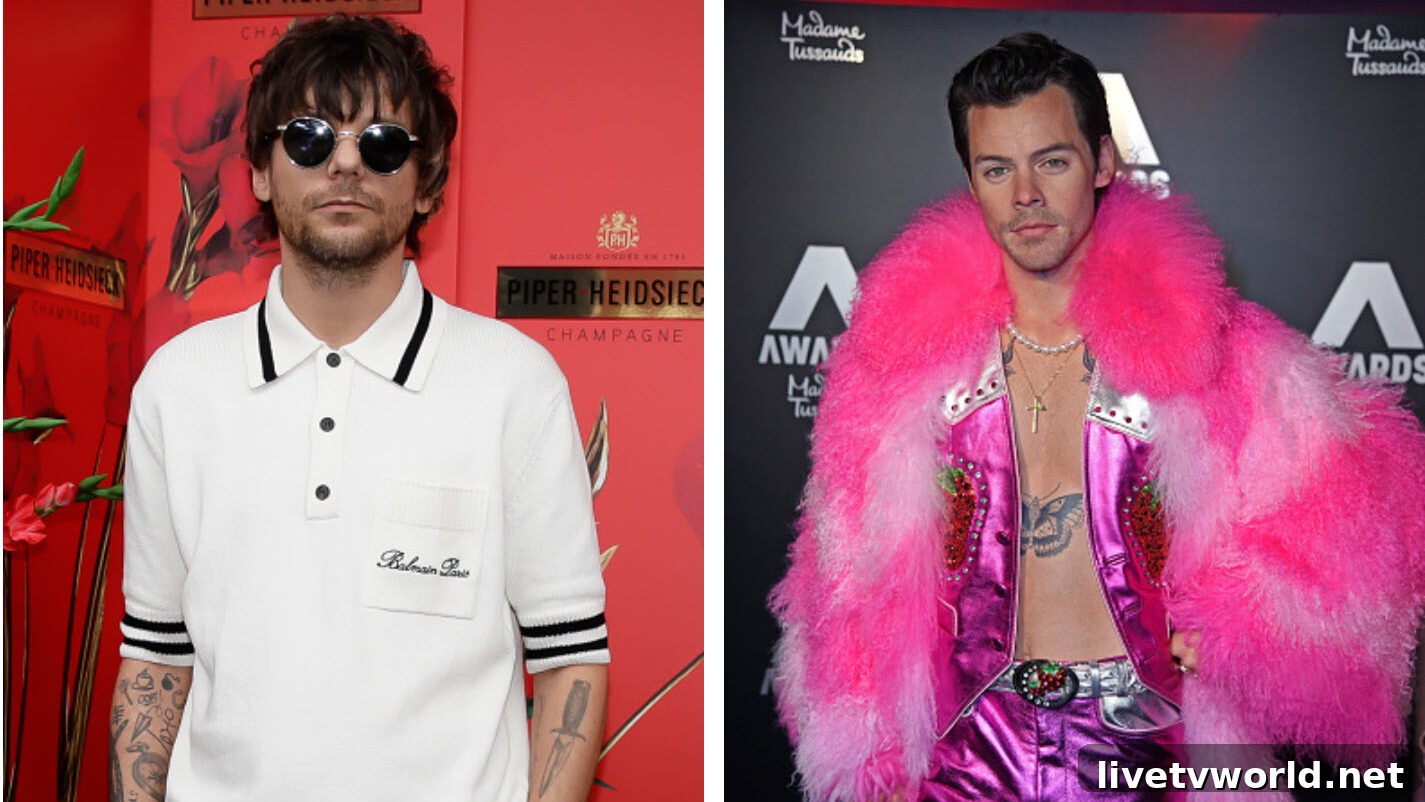
One Direction’s Louis Tomlinson still irritated by persistent Harry Styles romance conspiracy that some fans continue to believe
Conspiracy theories can be remarkably durable. The longer someone invests time and emotion into a theory, the harder it becomes for them to let it go — a psychological pattern often tied to sunk-cost thinking. That dynamic helps explain why, more than a decade after One Direction’s rise to fame, a segment of fans still clings to the so-called “Larry” conspiracy that insists Louis Tomlinson and Harry Styles were secretly in a romantic relationship.
Despite the band splitting in 2016 and both men moving on to separate lives and careers, some followers remain convinced. They interpret photos, comments and public appearances through a narrative that places the two singers at the center of an elaborate, hidden romance supposedly orchestrated by outside forces. Those believers are commonly known as “Larries,” and their persistence has continued to frustrate the artists involved.
Louis Tomlinson has addressed the subject directly on multiple occasions, saying the rumors bother him. He told a Brazilian news outlet that there is little he can do to change the minds of those who are deeply invested in the theory: “There is nothing I can say. There is nothing I can do to dispel the believers of that conspiracy. They are so intertwined with what they believe to be the truth now that they won’t actually see the truth for what it is.”
The rumors have remained bothersome not because they are new but because they can become intensely personal. Louis explained that while some speculation is just part of life in the public eye, the conspiracy territory sometimes crosses a line. He emphasized the importance of his son, Freddie, and said that when the conversation drifts into unfair or invasive territory, it becomes genuinely upsetting.
“It gets far too personal”
“It does irritate me a little bit, you know? But it is just kind of the nature of the job, I suppose,” Louis said. He added that on occasion the rumors “broach some stuff that is really unfair,” and acknowledged that once an idea takes hold among believers, it becomes extremely difficult to change their minds: “So it kind of just is this thing that exists now. There’s nothing I can do about it, there’s nothing I can say about it to stop people making up what they want to make up. So be it!”
Both Louis and Harry have repeatedly denied the claims and have otherwise focused on their solo careers, yet the conspiracy continues to attract attention in online spaces. For the artists, those persistent rumors are an unwanted distraction from their music, their lives and, in Louis’s case, his responsibilities as a father.
One Direction itself was formed in 2010 by talent show judge Simon Cowell, assembling five solo contestants into a group that quickly became a global phenomenon. Alongside Louis and Harry, the lineup included Zayn Malik, Niall Horan and Liam Payne. The band produced multiple hit singles and built an enormous, devoted fan base before announcing an indefinite hiatus in 2016. Since then, members have pursued solo work and rarely intersect professionally, which makes the continued belief in a shared secret relationship difficult to square with their public histories.
Understanding why conspiracy theories like “Larry” persist requires looking at a mix of emotional investment, community reinforcement and selective interpretation of evidence. For some fans, the theory becomes part of an identity or a community conversation, and admitting it might be wrong would mean accepting that time and emotion were spent on a false narrative. That dynamic helps explain both the staying power of the belief and the frustration it causes those targeted by it.
From a practical standpoint, the impact on Louis is clear: intrusive speculation can influence mental well-being and strain personal boundaries. He has made his priorities plain, naming Freddie as the most important person in his life, and indicating that when rumors cross into unfair territory, they stop being just another story and become a real problem. For fans and observers, the situation is a reminder of how public lives can be shaped — and distorted — by narratives that persist long after the facts have moved on.
Ultimately, Louis’s reaction reflects a common tension experienced by many public figures: balancing openness with privacy while navigating an audience that sometimes constructs its own version of reality. Whether or not the conspiracy will ever dissipate depends less on what the subjects say and more on how the community that sustains it chooses to let go.